
Accurate Visual Representation - Verified Views
“An Accurate Visual Representation (AVR) is a static image that shows the location of a proposed development, the degree to which it will be visible, its detailed form and/or the materials to be used. AVRs combine images of the proposed development with a representation of the existing view.”
Reference: GLA - London View Management Framework: Supplementary Planning Guidance (2012) Appendix C: Accurate Visual Representations.
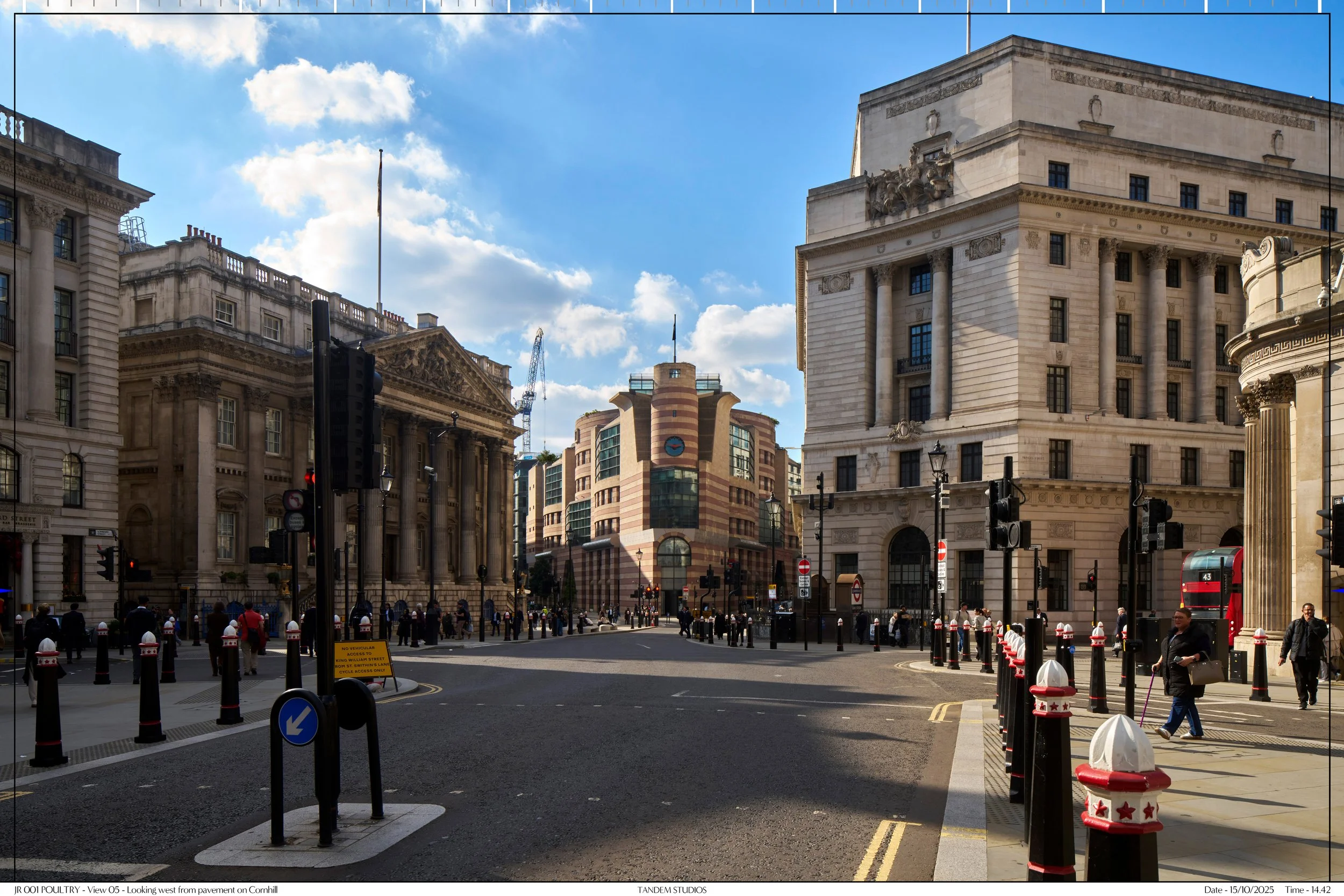
Structured Precision, Every Step. Beautifully considered.
Our Approach
At Tandem, we believe Accurate Visual Representations (AVRs) should go beyond simply demonstrating the position and scale of a proposed building. Whilst technical accuracy is fundamental, a carefully considered AVR can communicate the architectural qualities of a scheme, its relationship with its surroundings and its contribution to the wider urban environment. Each of these elements plays an important role in how a proposal is understood by planning authorities and the public.
Light and atmosphere
We carefully consider both the time of day and prevailing weather conditions when undertaking photography. Light defines architectural form, articulates materiality and influences our perception of scale. Photography taken at an inopportune time of day can create unnecessary visual contrast between a proposed development and its surroundings. A considered approach to lighting allows us to present the architecture in a natural, balanced and representative manner.
Viewpoint and composition
We work closely with planning consultants to refine the precise location of each photographic viewpoint. Even a subtle shift in camera position can significantly influence the perception of a building and its relationship with the surrounding townscape. Careful consideration of composition ensures that the architectural intent and contextual relationships are communicated clearly, whilst meeting the technical requirements of the planning process.
Life and context
We rarely experience architecture in isolation. We encounter buildings as part of our everyday lives, amidst the movement, energy and activity of London's streets. Pedestrians, passing buses and taxis all contribute to the character and identity of a place.
Whilst maintaining an unobstructed view of the proposed development, we believe that capturing this everyday activity adds an important layer of authenticity to an AVR. It allows the viewer not only to understand the physical presence of a building, but also to appreciate how it might be experienced as part of a living, evolving city.
AVR 0
Location of proposal
Size of proposal
AVR 1
Location of proposal
Size of proposal
Degree of visibility
AVR 2
Location of proposal
Size of proposal
Degree of visibility
Description of architectural form
AVR 3
Location of proposal
Size of proposal
Degree of visibility
Description of architectural form
Use of materials